The Best Books I Read in 2018
2018 was a year I read absolutely phenomenal books, but in continuing with my tradition, I only am choosing my top three. Two books I really enjoyed that did not make my list were Outliers by Malcolm Gladwell and The Road Ahead by Bill Gates. I chose to read Outliers due to the blockchain revolution. In December 2017, with the crazy high prices of cryptocurrencies, the world finally took notice of the underlying technology cryptocurrencies use, blockchain. With the radical rise of this new technology, I was wondering if it was possible to predict who the "outliers" will be. I chose to read The Road Ahead because I was curious if, 23 years after its publishing, how far down the road we have come, or if we are even on that road at all.
For full reviews of my 2018 top three reads, see the LinkedIn post I made at the end of that year or read an abridged version of the post below.
The Last Lecture
by Randy Pausch with Jeffrey Zaslow (contributer)
The Last Girl: My Story of Captivity, and My Fight Agaisnt the Islamic State
by Nadia Murad, Foreword by Amal Clooney
Good to Great: Why Some Companies Make the Leap... and Others Don't
by Jim Collins

I first encountered this book when planning my Honors College Senior Capstone project. I had always heard of it, but never found the need to read it. For my capstone, I decided to create West Chester University's Legacy Lecture Series. Focused on building stronger relationships between the larger campus community, I found this time perfect to read Pausch's work. Truly inspirational in nature, I found many striking similarities to my top read from last year, Tuesdays with Morrie. Concerned primarily with life lessons Pausch wanted to offer, his anecdotal format, in my opinion, proved extremely affective. I resonated well with most of Pausch's stories, but there was one in particular which truly stuck. To paraphrase, Pausch stated, "If you never ask the answer will always be no." How often do we sit in class, meetings, or with our family and have questions pop up in our head, but are too afraid to ask? Pausch convinced me how odd it is for us to not ask those questions when the worst someone could answer us with is, no. That word is not the end of the world, it's simply just a word.
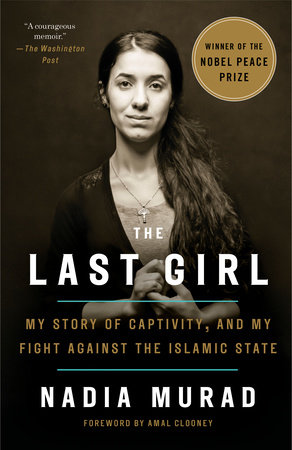
Nadia Murad is a Yazidi from Kocho, Iraq. Tragically, when ISIS invaded her hometown she was used a sex slave. Able to escape because her captor left a door unlocked, Murad has stopped at nothing to achieve justice for her fellow Yazidis. Traveling the world to share her story, her Nobel lecture was extremely powerful and made a call for action to stop sexual violence. Reading Murad's book, I felt like I was living right beside her. The joyful, care-free days in Kocho quickly turned to desolate despair. Perhaps the best part of the book was the end, when Nadia was safe. This book came to life when I had the opportunity to travel to Oslo, Norway in early December 2018 for the Peace Days. What really brought Nadia's words to the next level was her and Dr. Mukwege's exhibit about sexual violence at the Nobel Peace Center. This was the only part of my trip to Norway where I found myself not able to take pictures. The exhibit was extremely powerful and I highly recommend seeing it while it is still on display. If you cannot make it to the exhibit, read Nadia's book. The Last Girl is a must read for anyone wanting to make the world a better place.
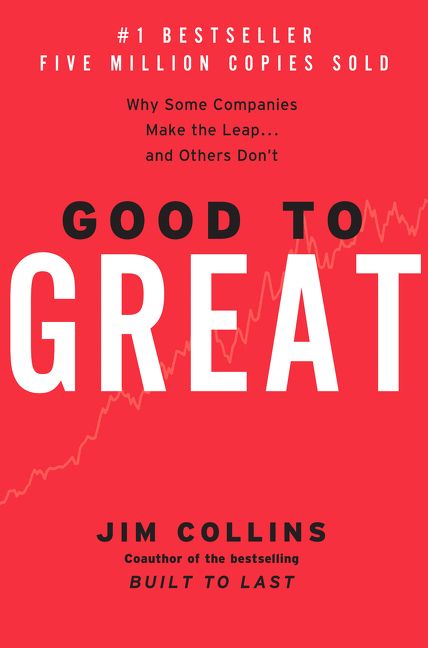
As a Computer Science student, algorithms are important to me. As an Honors College student at West Chester University, where honors classes are focused on developing leadership skills, leadership is important to me. Ever wanted to find an algorithm for leadership? Let me introduce you to Jim Collins. In Good to Great, Collins and his team set about finding an algorithm for what makes a good company turn the corner and become a great company. Through numerous interviews and case studies, Collins delivers this algorithm in a down to earth, easy to follow manner. What was most surprising to me was how simple and straightforward the parts of the "leadership equation" actually are. My only complaint with Collins' book is the first chapter. Personally, I found it extremely boring and it almost made me put down the book for good. If you can get past the first chapter (and I recommend you do), you will enjoy the rest.