The Best Books I Read in 2020
I've certainly upped my reading total from last year. In fact, by the time this year ends, I should triple last year's total. Highlighting three reads is tough this year beacuse I've read very, very good books. With that being said, I know I cannot highlight just three as four really stood out. From reading about the promises of artificial intelligence to how having a growth mindset, rather than a fixed one, can unlock learning possibilities never thought of before 2020 was a great year to read. From some of the books I've read, I've learned how to better take care of my body and improve my strength and overall physical health, communicate more effectively with my peers, and understand the inner workings of staying, and coming into, political power. Here's this year's top reads:
How to Win Friends and Influence People
by Dale Carnegie
The CEO Next Door
by Elena L. Botelho and Kim R. Powell
The Dictator's Handbook
by Bruce Bueno de Mesquita and Alastair Smith
The Ride of a Lifetime
by Robert "Bob" Iger

Dale Carnegie is a genius. He may be a genius in terms of IQ, but I'm talking about his intelligence in terms of EQ (or emotional quotient). If you've ever wondered how to communicate more effectively with others, how to lead more effectively just by communicating better, or how to make strong friendships, then this is the book for you. The simple lessons Carnegie lays out in How to Win Friends and Influence People have survived the test of time. First published in 1936, 84 years later and I found this read still extremely relevant to today's culture. As we depend more on virtual meeting technology and social networks/social media to communicate, I am fearful this book will not be as impactful in the future. However, one thing I've observed over my 23 years of life is that the need for a physical connection never seems to go away. Put by the Yuval Noah Harari in my top read last year (Sapiens), the species Homo sapiens dominates the world today because of our ability to collaborate with others. Put in simpler terms, it is in our DNA to collaborate and want to work together and achieve a common goal together. Whether that goal be a huge project with enormous benefits to society or just the goal of meeting up for a drink at a bar. Even in the midst of the COVID-19 global pandemic, humans still want to physically see each other. How to Win Friends and Influence People won't just help you socially, it will also help you professionally and personally. Carnegie recommends coming back to this book every few months to refresh on what he talks about and I agree with him. I plan to read this book again, and, for that matter, many more times in the future.
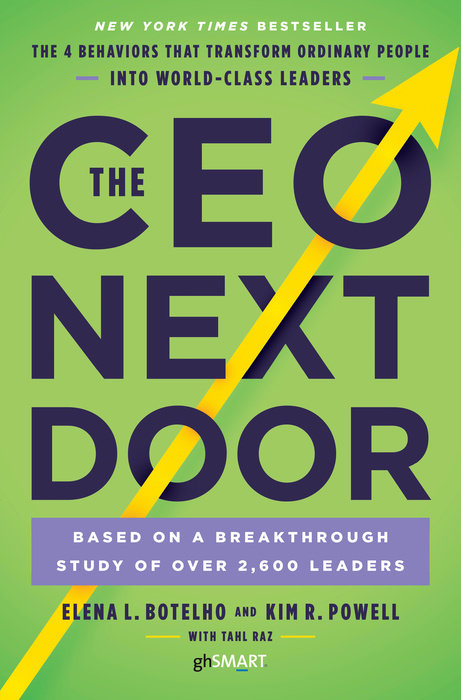
Do you want to move up the corporate ladder in your career? Or do you already manage individuals, but want to understand them and their career aspirations better? Then The CEO Next Door is for you! Botelho and Powell created this book based off of research they conducted on over 2,600 leaders and a database comprised of over 17,000 CEOs. Its main purpose functions as a guide that roughly outlines how to become CEO of a company if you are already an executive, or at least on pace to become an executive one day. However, its application stems further than the executive workspace. I found this book highly applicable to all levels of the corporate chain. I also think that reading this book early on in one's career can set the pace for the outcome of that career. As someone who is literally at the bottom of the food chain right with being a full time PhD student, I do plan on coming back to this book once I start a full time career. I was sure I had some notes written down from the lessons I've learned from this book, but I cannot seem to find them. One lesson that has stuck with me though is this: At any time in your job, whether you be a register worker at a grocery store or the CFO of a small business, make sure your manager always knows where you want to go. If you want to move from the register to a customer relations specialist, make sure they know that. If you want to one day become CEO of your company, make sure your manager knows that. If you simply want to move up the ladder, or take a lateral move, make sure your managers knows that. I will offer that if you are working the register at a grocery store and you tell your manager you want to become CEO one day, they probably won't think much of it. However, if you tell your manager you want a job similar to theirs, they can better help you with that as it's more realistic. Whatever your current career setting, use this book as a general framework on how to move up the corporate ladder and then think how you can directly apply it to your current role.

I'll be frank. This book did not seem like something I would ever read. In fact, I did not buy this book, nor do I think this is a book I would buy. I was gifted it and there it sat on my shelf for almost a year. I decided I had to give it a read and I sure am glad I did. Did you ever wonder how politicians come to power? How they stay in power? Or how it seems like some politicians work governmental systems to their advantage? If you answered yes to any of the following questions than this the book for you! The Dictator's Handbook starts off by explaining the unwriten rules of politics. These rules set up the premise of the entire book. In the chapters that follow, examples of how these rules are obeyed are shown in real life scenarios. I'll make that explicitly clear: the situations this book uses as examples to show the unwritten rules of politics actually happened. The authors talk about everything from different forms of government to foreign aid distribution and reception, violent protests, and policy making. For the first book I've read about government and politics, this one certainly made an impression.
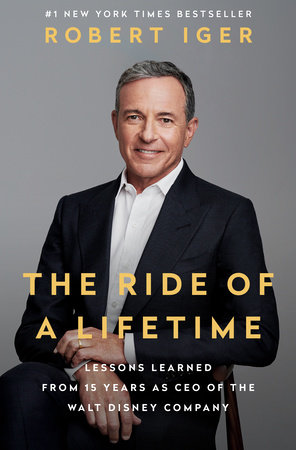
If I had not read either of three books preceding this one in 2020, this would've been the best book I read all year. Despite not being a memoir, Bob Iger sure makes this leadership book feel like one. The way he is able to weave leadership lessons in with personal stories is a true strength. The most similar leadership book to The Ride of a Lifetime that I can think of is Satya Nadella's Hit Refresh. Both books emphasized just how important culture is to a place of a work. Iger takes this lesson one step further by demonstrating how much more important it is to maintain culture of an organization that your company acquires. Acquiring companies like Pixar, Marvel, and LucasFilm is no easy task. To have them all perform better after acquisition than they were before acquisition is truly impressive. Iger's approach to leadership, and more importantly leading others, is something to admire. Not one to beat around the bush, he emphasizes the importance of honesty and maintaining that honesty through the course of a relationship. One lesson I'll take with me is the following phrase: "Micromanaging is underrated -- to an extent." I will certainly look back to this book in the future when I need to make tough leadership calls.